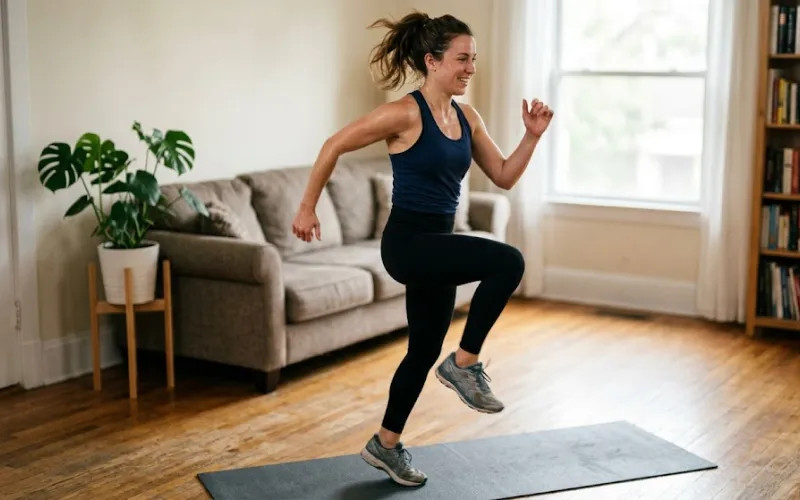
An At Home Cardio Workout can help you stay active when your schedule makes gym trips unrealistic. Many people skip exercise because the setup feels too big. They imagine driving somewhere, changing clothes, finding equipment, and committing a full hour. Home cardio makes the starting line much closer. You can move in your living room, bedroom, or any clear space. You can choose low-impact or higher-energy options. You can also stop treating fitness as an all-or-nothing project. A clear routine helps you use small windows well. With the right structure, even busy days can include meaningful movement.
Planning matters because motivation changes daily. Some days you feel ready. Other days you feel tired before you begin. A plan removes the debate. It tells you what to do, how long to do it, and how to adjust. A simple cardio workout can include warmup, intervals, recovery, and cooldown. That structure keeps sessions efficient. It also helps you avoid doing too much too soon. When workouts feel organized, you trust the process more. Trust makes consistency easier. Consistency creates the results that random effort cannot.
Intensity should match your current fitness level. Beginners may need low-impact movements and longer rest. Intermediate exercisers may enjoy faster intervals or more complex patterns. Your breathing gives useful feedback. You should feel challenged but able to recover. If your form falls apart, reduce intensity. If you feel pain, stop and adjust. Cardio is not more effective just because it feels punishing. It works when the challenge is repeatable. Use a scale from one to ten. Many sessions can sit around six or seven. This gives your body room to improve without turning every workout into a test.
Great home cardio moves do not need machines. Marches, step jacks, side steps, high knees, skaters, punches, squat reaches, and mountain climber modifications can all raise your heart rate. Choose movements that fit your joints and space. Use cardio workouts at home as a flexible category, not a single style. You can make sessions dance-like, athletic, gentle, or intense. Variety helps motivation. It also prevents boredom. Keep the first few workouts simple. Learn the movements well. Then combine them into stronger intervals as confidence grows.
A twenty-minute session can be very effective when organized well. Begin with three minutes of warmup. Use easy marching, shoulder rolls, and side steps. Then complete twelve minutes of intervals. Work for forty seconds and recover for twenty seconds. Choose four moves and repeat them three times. Finish with five minutes of slower movement and stretching. This format feels clear and manageable. You can also reduce it to ten minutes on demanding days. The point is to create a structure you can repeat. When the routine is familiar, starting takes less mental energy. That supports long-term consistency.
Motivation often improves when the workout feels rewarding quickly. Use music that lifts your energy. Set a visible timer. Keep a simple calendar streak. Try a mini challenge for five sessions. A fitness motivation guide can help you build these cues into your routine. Avoid waiting to feel inspired. Starting usually creates motivation. Promise yourself five minutes, then continue if you feel good. This reduces resistance. It also teaches your brain that exercise is approachable. Small wins make the next workout easier to begin.
Small spaces can still support strong cardio. You do not need long travel patterns or jumping moves. Marching variations, punches, step taps, standing core moves, and controlled squats all work in limited room. Keep movements vertical instead of wide. Use a mat-sized area as your boundary. Choose low-impact options if noise matters. Apartment-friendly cardio can still feel challenging when intervals are organized well. Focus on posture, rhythm, and range of motion. You may be surprised by how much energy a compact session creates. Constraints can make workouts more creative. They do not need to stop your progress.
Progress tracking makes results easier to see. Notice how quickly you recover between intervals. Track how long you can move with good form. Record your energy after workouts. Watch for better mood, steadier stamina, and more confidence. Use AI fitness planning if you want help organizing weekly sessions. You can ask for gradual progressions and fresh combinations. Keep the focus on consistency first. Numbers matter, but they are not the whole story. Feeling more capable in your body is progress too. That confidence keeps the habit alive.




Leave a comment