
A No Equipment Cardio Plan is perfect when you want effective movement without machines, weights, or a gym membership. Many people delay fitness because they think they need special gear first. In reality, your body can create plenty of challenge through rhythm, range of motion, speed, and intervals. Home cardio can be simple, flexible, and surprisingly energizing. The key is having a plan that guides your effort. Random movement can help, but structured sessions build confidence faster. You know what comes next. You know when to recover. You know how to progress. That clarity makes exercise feel less intimidating and more doable.
Structure keeps home workouts from becoming chaotic. It helps you warm up, work, recover, and cool down. Without structure, beginners may do too much too quickly or stop before the session becomes useful. A home cardio plan gives each workout a purpose. Some sessions can build endurance. Others can improve coordination. Some can stay gentle during lower-energy days. This flexibility supports consistency. It also helps your body adapt gradually. You do not need equipment to progress. You need repeatable challenge, smart recovery, and enough variety to stay engaged.
Low-impact cardio is a strong place to begin. It reduces jumping while still raising your heart rate. Try marching, side steps, step jacks, knee lifts, standing punches, and controlled skaters. Focus on posture and steady breathing. Increase arm movement when you want more intensity. Make steps larger when you feel ready. Low-impact does not mean easy. It means joint-friendlier and more adaptable. This matters if you are returning after a break or building confidence. A gentle start can still create real progress. More importantly, it helps you finish workouts feeling successful instead of discouraged.
The best moves are easy to learn and simple to modify. Squat reaches, fast feet, lateral steps, plank walkouts, standing mountain climbers, and shadow boxing can all fit home training. Choose a small group first. A bodyweight cardio routine should feel smooth enough to repeat. Complicated choreography is optional. Good form matters more than flashy movement. Start with four exercises. Repeat them in short intervals. Then add variety as you improve. This keeps the plan manageable. It also helps you learn what your body enjoys most.
Intervals make cardio easier to organize. They also help you control intensity. A beginner might work for twenty seconds and rest for forty seconds. A more confident exerciser might work for forty seconds and rest for twenty seconds. You can adjust based on energy, space, and experience. The goal is not constant exhaustion. The goal is repeatable effort. Recovery periods are part of the training. They let you maintain better form. They also make the session feel less overwhelming. As stamina improves, you can lengthen work periods or reduce rest. Progress should feel challenging, not reckless.
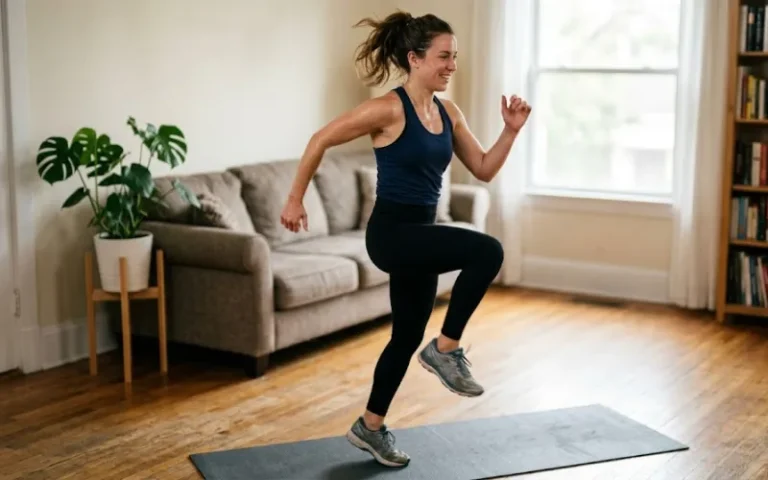
Small homes can still support effective cardio. Use moves that stay within a mat-sized space. Marches, punches, step taps, standing crunches, and squat pulses can raise intensity without wide travel. Keep noise low by choosing controlled steps instead of jumps. Use apartment-friendly workouts when neighbors, flooring, or family schedules matter. The setting does not need to be perfect. It needs to be safe and repeatable. When you adapt the workout to your space, consistency becomes easier. Your environment becomes part of the solution instead of an excuse.
Progression should happen in layers. First, complete sessions consistently. Next, improve movement quality. Then extend time or increase intensity. You can add more rounds, shorten rest, or choose slightly harder variations. Do not change everything at once. Gradual progress protects motivation and recovery. It also helps you understand what works. If soreness becomes too strong, step back. If workouts feel too easy, add a challenge. This flexible method respects real life. Some weeks will feel stronger than others. The plan should support that reality. Fitness grows best when you keep returning with patience.
Results can appear in several ways. You may climb stairs with less effort. You may recover faster after movement. Your mood may feel brighter after sessions. Your stamina may improve during daily tasks. A beginner fitness ebook can help you track these changes with more structure. Avoid measuring progress only by appearance. Cardio supports energy, confidence, heart health, and discipline too. Those wins matter. When workouts become part of your week, your body feels more capable. That feeling can become the strongest motivation of all.



Leave a comment