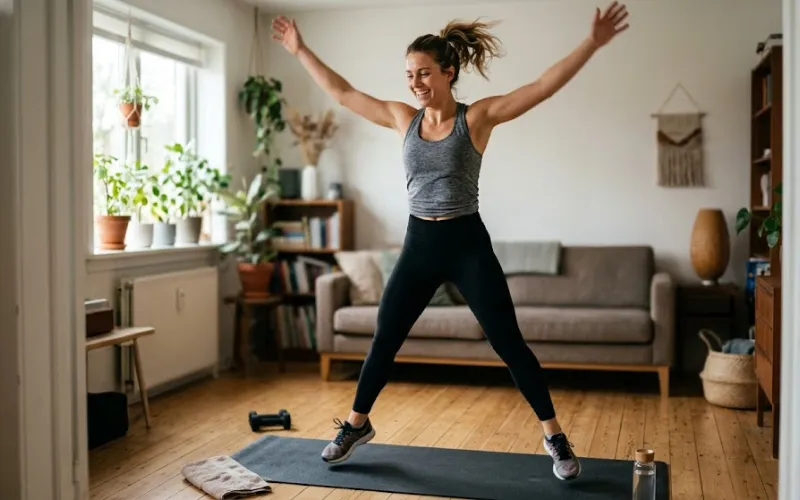
Home Fitness Cardio gives you a practical way to build stamina without commuting to a gym or buying complicated equipment. Many people want to move more, but they lose momentum when workouts feel inconvenient. Home training removes several barriers at once. You can start quickly. You can adjust intensity. You can fit movement into real life. Cardio also supports energy, mood, endurance, and confidence when practiced consistently. The key is choosing routines that feel challenging but not overwhelming. A clear plan helps you avoid random workouts. It also helps you progress safely. With structure, your living space can become a reliable fitness zone.
Cardio at home works because it reduces excuses. You do not need travel time, perfect weather, or a full studio setup. You need space, intention, and a routine that matches your current level. A beginner cardio routine can start with low-impact moves and short sessions. That makes the habit feel less intimidating. Progress then builds naturally. Your heart, lungs, legs, and coordination adapt over time. Confidence grows because you can feel improvement. The routine becomes less about punishment and more about capability. That mindset helps consistency last.
Your home workout space does not need to look professional. It needs to feel safe and easy to use. Clear enough floor space for stepping, reaching, and turning. Wear supportive shoes if your floor requires them. Keep water nearby. Choose music if it helps motivation. Make sure pets, rugs, and furniture do not create tripping risks. A small mat can add comfort for warmups and cooldowns. Good lighting also helps energy. When the space is ready, starting feels easier. You remove friction before motivation fades. That simple preparation can make the difference between skipping movement and completing it.
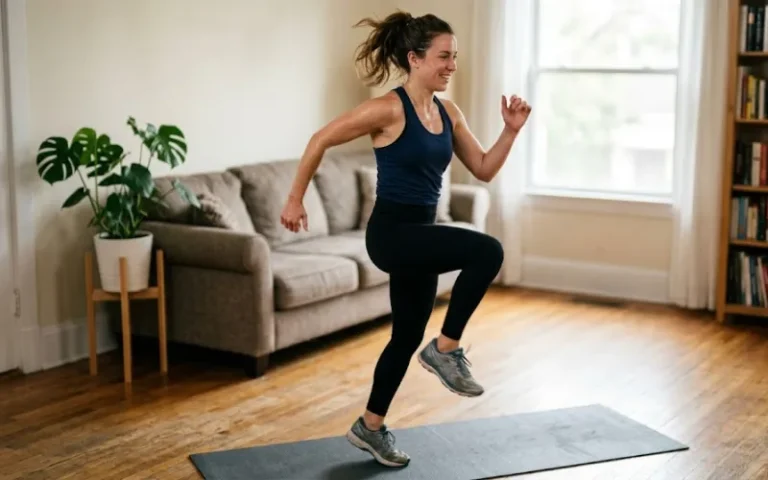
Beginners should focus on control before intensity. Marching, step touches, modified jumping jacks, knee lifts, and low-impact skaters can all build endurance. Use intervals that feel manageable. For example, move for thirty seconds, then recover for thirty seconds. Repeat for ten to fifteen minutes. A no-equipment workout guide helps you combine simple moves without overthinking. Listen to your breathing. You should feel challenged, but not dizzy or unsafe. Start where you are. Progress works best when your first workouts feel successful enough to repeat.
Enjoyment matters more than many people admit. If a workout feels miserable every time, consistency will suffer. Add music with a strong beat. Use short challenges. Rotate movements. Try themed sessions, such as dance-inspired, athletic, or low-impact sweat days. Track small wins. Celebrate better stamina, not only calories or weight changes. You can also pair workouts with a favorite playlist or timer format. Variety keeps your brain engaged. It also helps different muscles participate. Cardio should feel energetic, not endless. When sessions feel more playful, you are more likely to return tomorrow.
Progression should happen gradually. Add time before adding intensity. Improve form before adding speed. Increase challenge when your current session feels too easy. You can make moves larger, reduce rest, or extend intervals. A cardio training plan can prevent random jumps that lead to burnout. Recovery matters too. Your body needs easier days to adapt. Progress is not about crushing every session. It is about building capacity. When you progress carefully, workouts feel sustainable. You also reduce the risk of quitting from soreness or frustration.
AI can help you organize workouts when you know your limits. You can ask for low-impact sessions, ten-minute plans, or beginner progressions. You can request a routine based on available space and energy level. Keep your prompts specific. Mention injuries, preferences, time limits, and equipment. Then review the plan carefully. AI should support your judgment, not replace it. If something feels unsafe, skip it. The best use is planning variety and reducing decision fatigue. It can also help you create weekly schedules. That makes home training feel more guided and less repetitive.
A lasting habit begins with realistic expectations. You do not need a perfect schedule. You need a repeatable one. Choose days and times that match your life. Keep sessions short at first. Attach workouts to existing routines, such as after coffee or before a shower. Use home workout motivation tools when energy dips. Remember that consistency can look modest. Ten focused minutes still count. As the habit strengthens, longer workouts become easier. The real win is becoming someone who moves regularly, confidently, and on your own terms.



Leave a comment